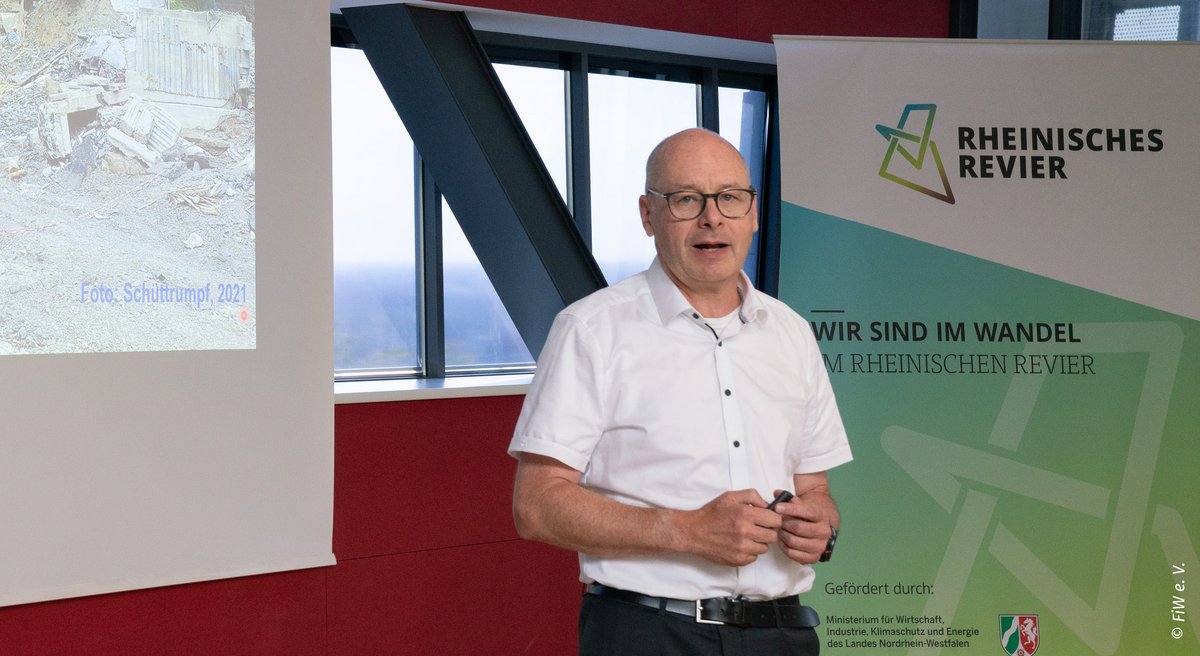
ZUKUNFT BLAU: Second AquaRevier stakeholder meeting at RWTH Aachen University's SuperC
Exchange on water resources, climate adaptation and structural change in the Rhenish mining district

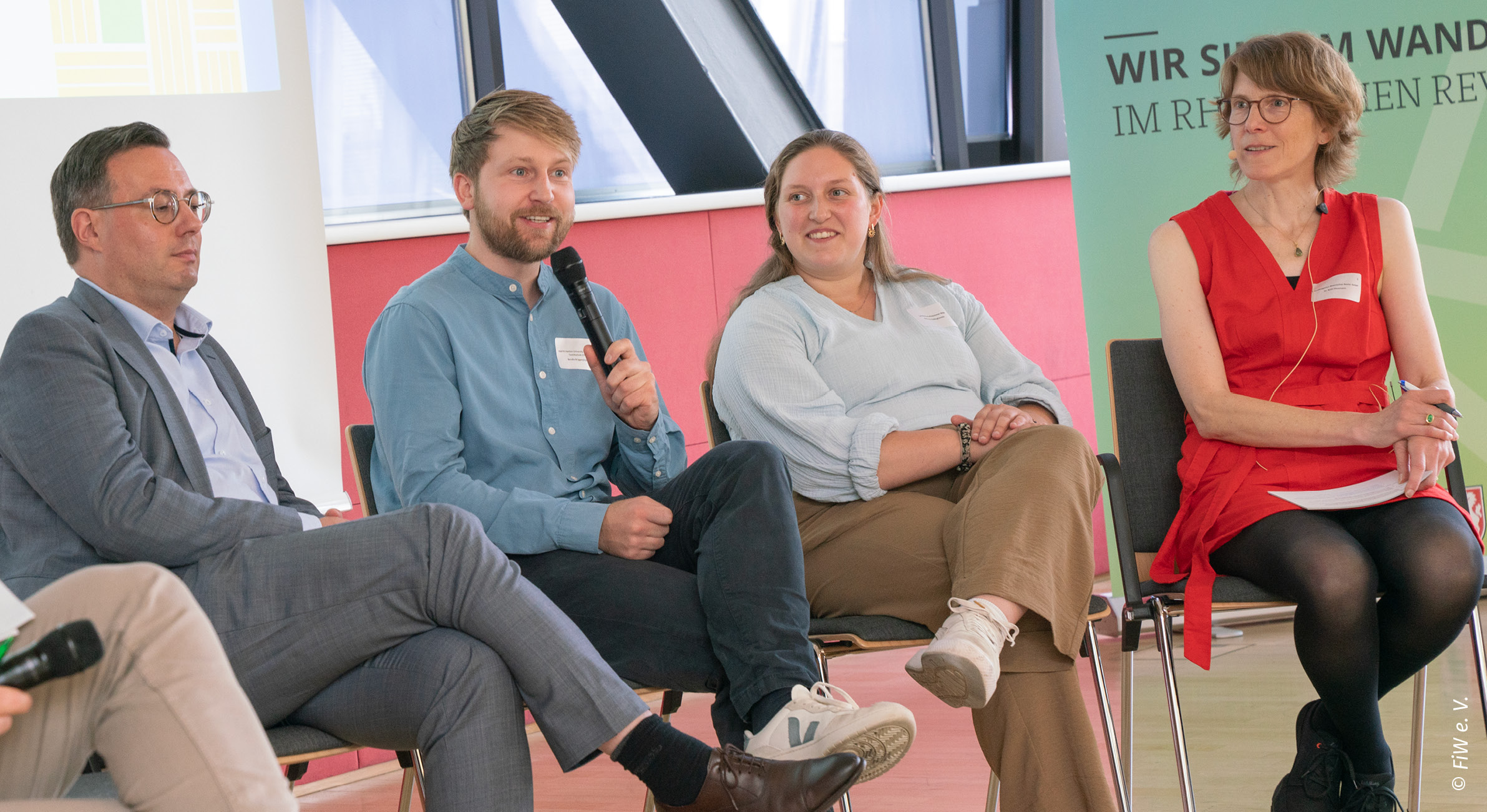


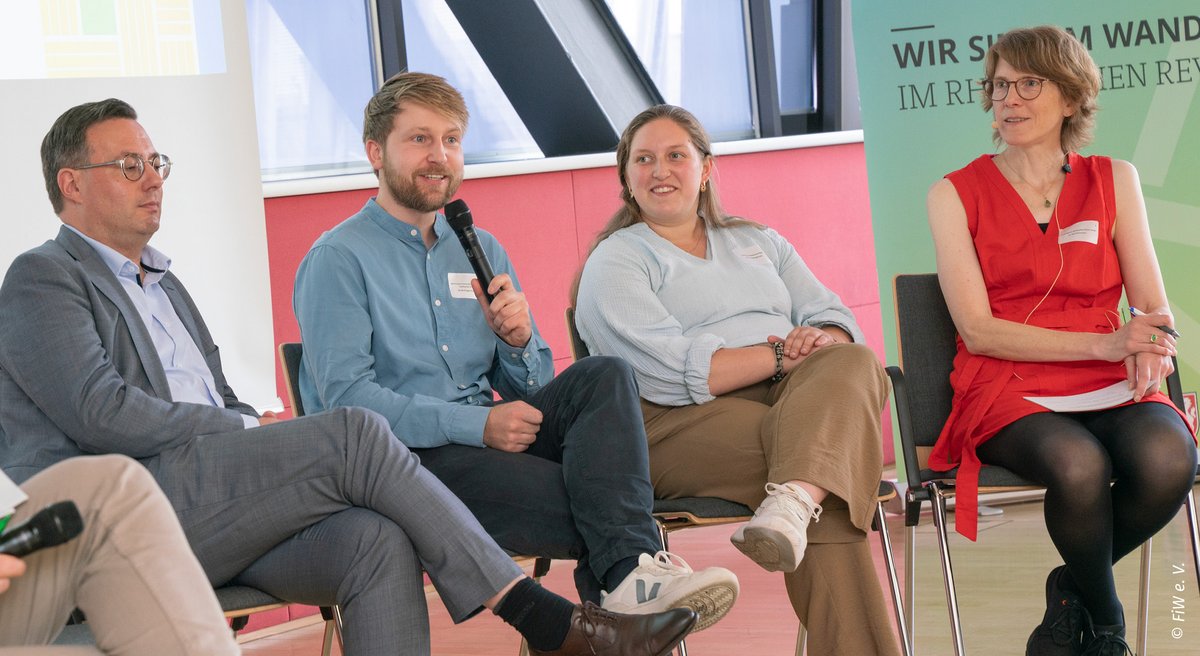
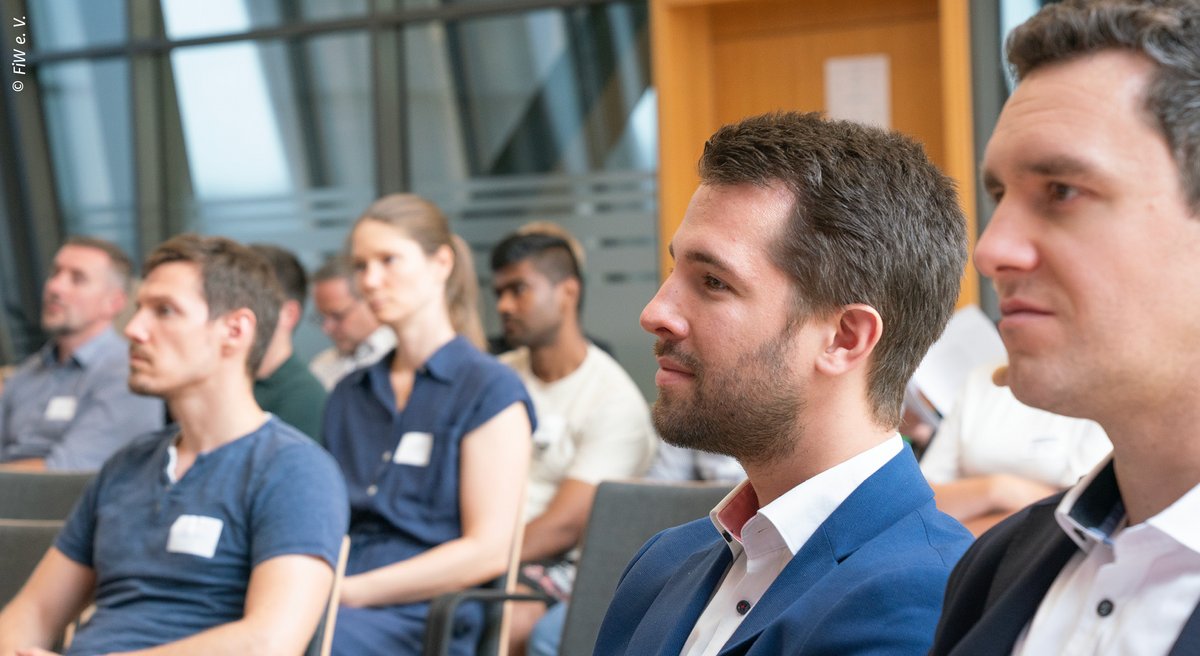
On 14 July 2026, the second stakeholder meeting of the AquaRevier project took place in the Ford and Generali Hall at RWTH Aachen University's SuperC under the title “ZUKUNFT BLAU – Water in the Rhenish mining district”. Around 80 participants from municipalities, water associations, industry, agriculture, research and other fields came together to discuss current challenges and perspectives for water management in the Rhenish mining district. The event was jointly organised by the AquaRevier consortium and the Zukunftsagentur Rheinisches Revier and was embedded in the qualification programme of the Revier-Akademie.
The central question was how future-oriented and climate-resilient water management in the Rhenish mining area can be further developed under the conditions of climate change, structural change and growing demands on water use. In addition to René Kremer’s presentation of the current status of the AquaRevier project, the focus was primarily on concrete solution approaches and best-practice examples: Prof. Dr.-Ing. Holger Schüttrumpf from the Institute of Hydraulic Engineering and Water Resources Management (IWW) at RWTH Aachen University provided expert input on obstacles to flood protection, while Dr. Ruth Hausmann from the Zukunftsagentur Rheinisches Revier gave an overview of the STARK funding framework. Further contributions highlighted perspectives from industry and agriculture – including Dr. Stefan Cuypers from Industrie Wasser Umweltschutz e. V. on the importance of water for the paper industry along the River Rur, Bendix Brüggenjürgen from the Institute of Textile Technology (ITA) at RWTH Aachen University on innovative technologies in the packaging and paper sector, Natascha Bellinghausen from the North Rhine-Westphalia Chamber of Agriculture on cooperative irrigation efficiency, and Gabriel Heineke from the Center Smart Industrial Agriculture on digitally supported agricultural production.
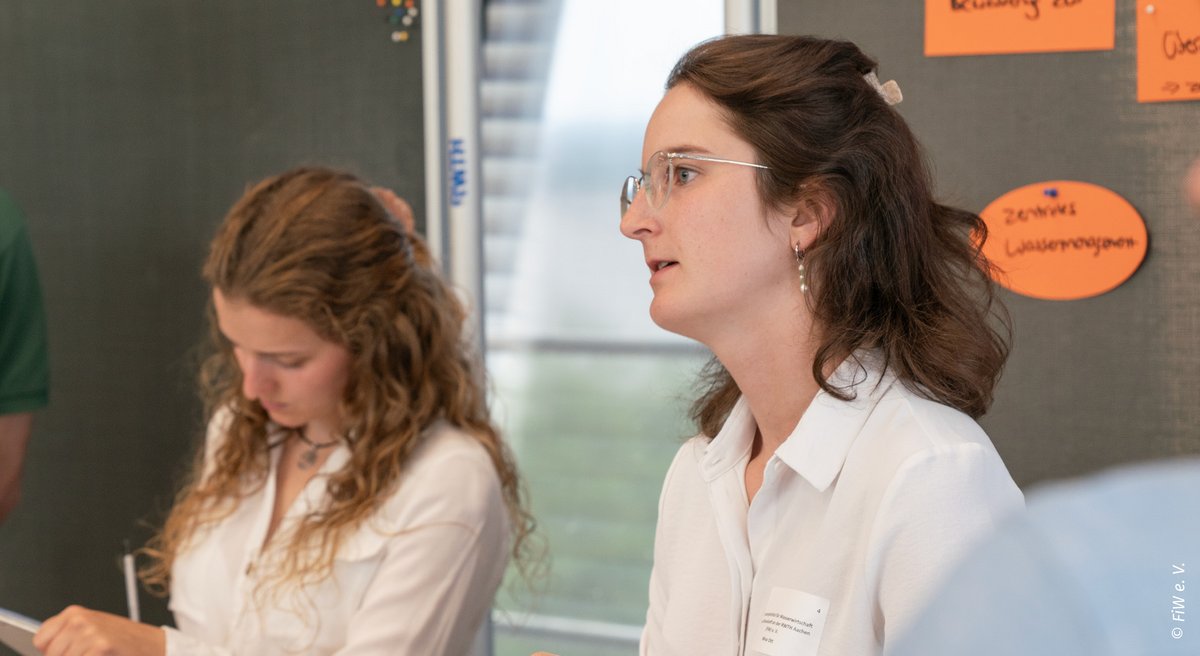
A particular focus was placed on interactive exchange. In a World Café format, participants discussed topics including natural water systems under pressure from structural change and climate change, the future distribution of water resources, and alternative water resources and water reuse. In addition, a moderated fishbowl discussion provided space for perspectives from the expert contributions as well as from the audience.
From the AquaRevier project perspective, the stakeholder meeting was an important building block for bringing together expert perspectives from within the region and beyond, and for aligning the ongoing project work with requirements from practice, administration, business and science. The discussions made clear that future-oriented water management does not depend on technical solutions alone. Recurring concerns included the need for improved communication between the actors involved, clearer interfaces between responsibilities, and faster and less complicated implementation of suitable measures. The prioritisation of topics and measures was also addressed as an important step to ensure that concepts can lead to concrete implementation pathways.
The input and discussion contributions will be evaluated over the further course of the project and will feed into the ongoing development of the AquaRevier case studies as well as into the development of practice-oriented transfer approaches. In this way, “ZUKUNFT BLAU” made an important contribution to linking expert knowledge, regional needs and implementation perspectives more closely.
AquaRevier develops strategies for future-oriented, climate-resilient water management in the Rhenish mining area. The project focuses on five case studies – ranging from reservoir and flood management to industrial water reuse, stormwater management and water use strategies in agriculture. The aim is to provide robust decision-making bases and transferable concepts for the water sector. Together with RWTH Aachen University’s ISA (Institute of Environmental Engineering) and IWW (Institute of Hydraulic Engineering and Water Resources Management), FiW coordinates the AquaRevier research project, which is funded by the Federal Ministry for Economic Affairs and Energy (BMWE) under the STARK funding measure and co-financed by the State of North Rhine-Westphalia.
Contact
René Kremer, M.Sc.
+49 241 80 2 68 21
/ E-Mail